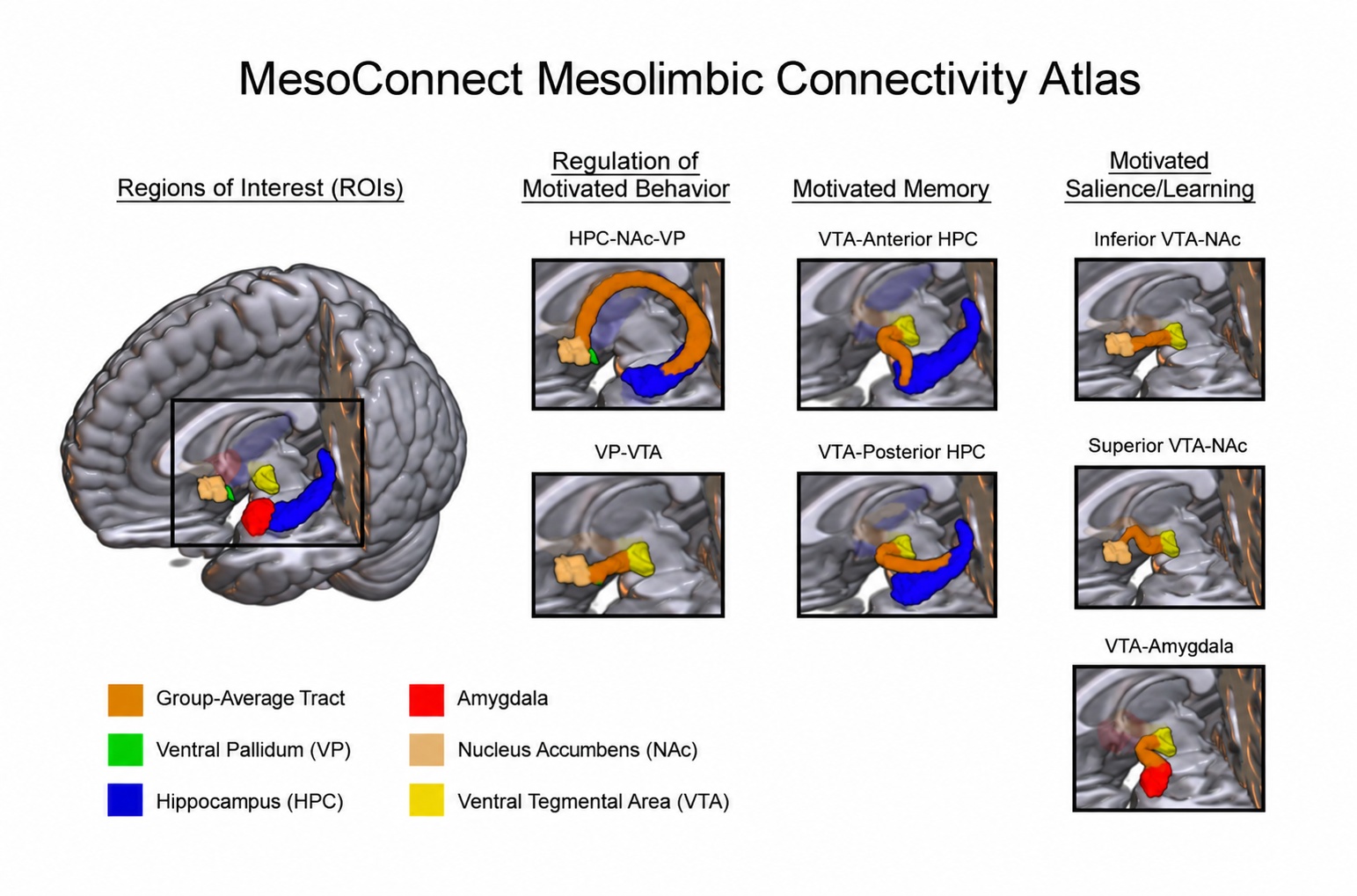
Corridor-constrained tractography
The warped atlas confines tracking to one corridor. The streamlines are estimated from each participant’s own diffusion data.
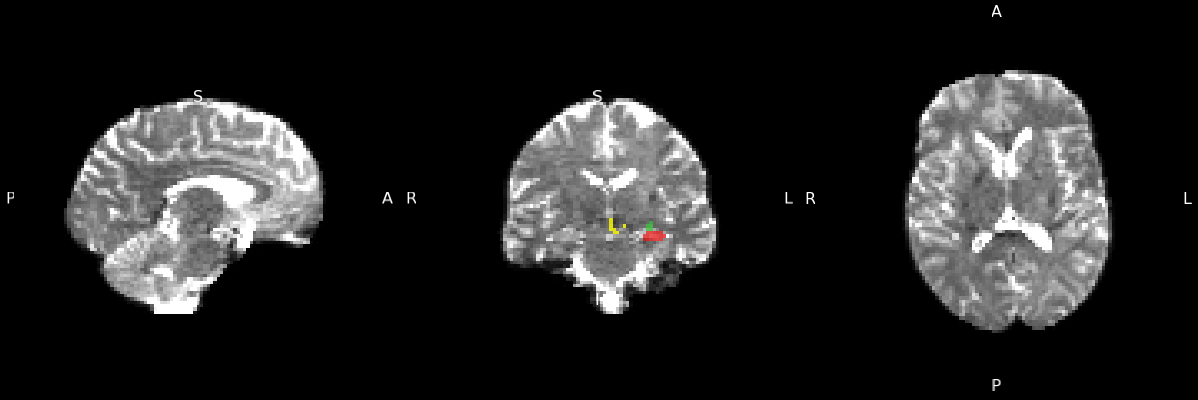
Registration and region warping
The pathway map and its seed and target regions move from standard space to the participant’s diffusion grid.
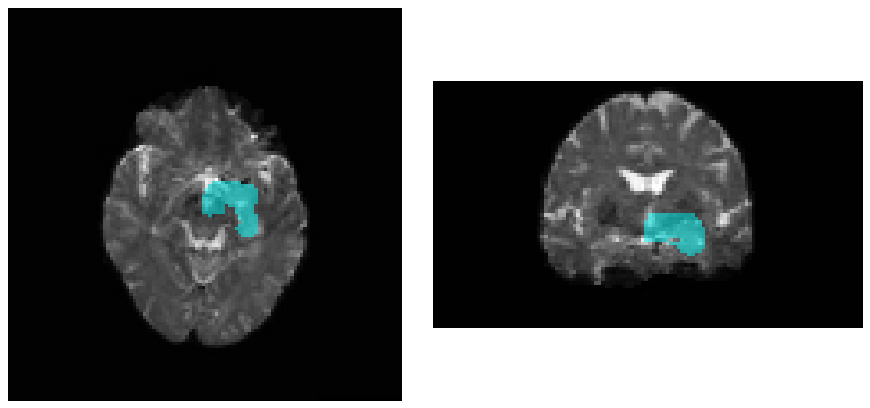
Corridor construction
The warped map is dilated and joined to the endpoints, and the region outside it is excluded from tracking.
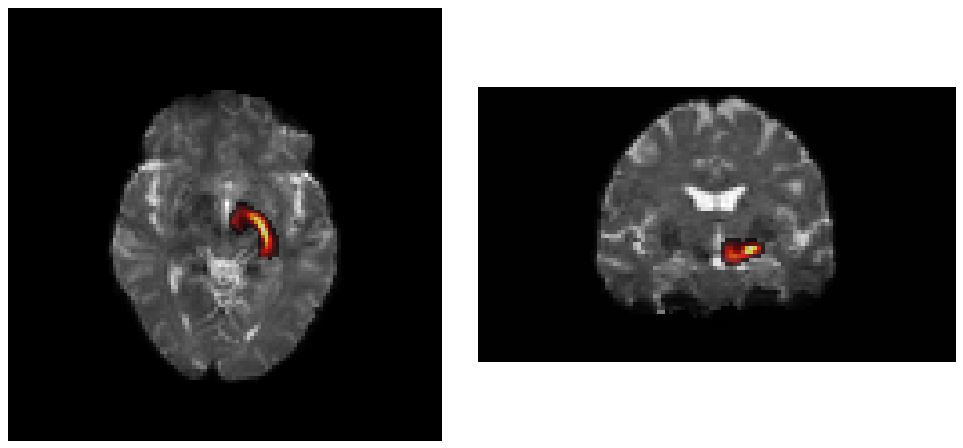
Tractography and bundle cleaning
Streamlines are estimated from the participant’s own data, and outlying streamlines are removed.
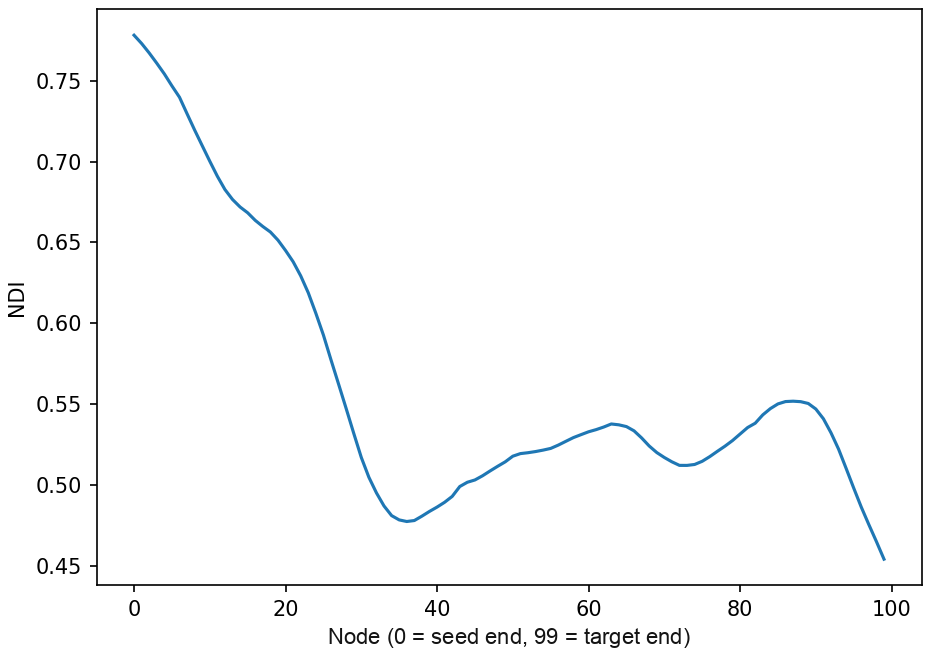
Along-tract profiling
Each scalar map is sampled at 100 nodes, giving the values that enter the group-level models.
Diffusion data reach this workflow already corrected, from the Diffusion MRI Preprocessing tutorial or an equivalent pipeline.